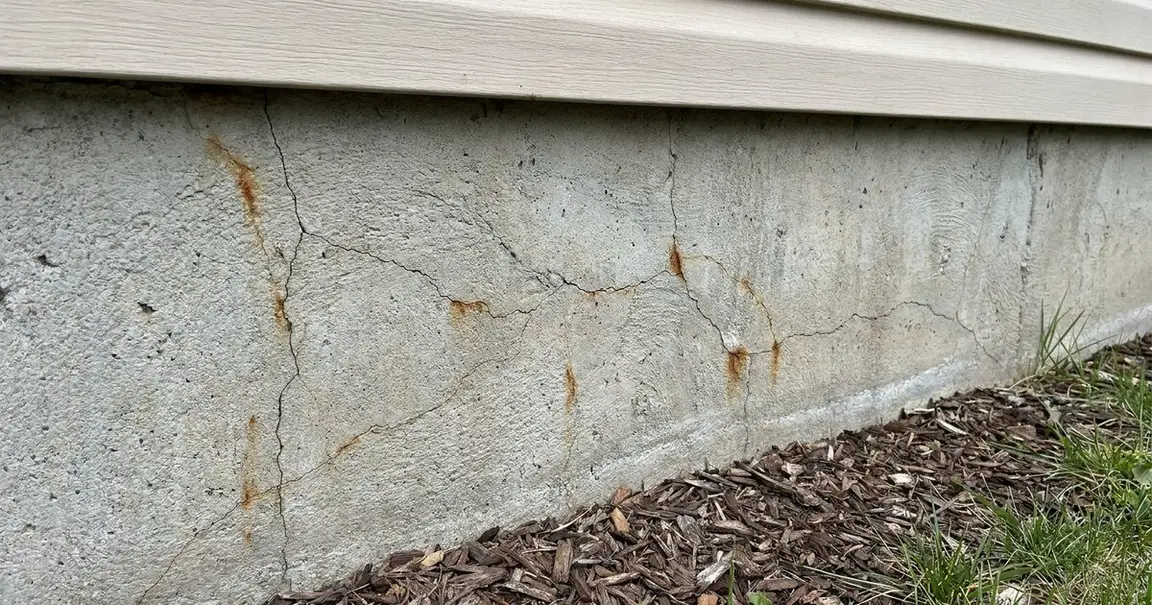

If you own a home in northeast Connecticut, you’ve probably heard the words “crumbling foundation” or “pyrrhotite.” Maybe a neighbor had their house lifted, or maybe you’ve spotted spider-web cracks in your own basement walls. One of the first questions homeowners ask is simple: can I still sell my house?
Yes, you can. But a crumbling foundation changes how the sale works. This guide explains what the problem is, how testing and state assistance work, what you have to disclose, and the main ways to sell.
This article is general information, not legal or engineering advice. Program rules change, so confirm details with the sources linked below and talk with a Connecticut real estate attorney and a licensed professional engineer about your home.
What Is a Crumbling Foundation?
According to the Connecticut Department of Housing, upwards of 35,000 homes in a radius of Stafford Springs face the potential for a failed concrete foundation because of the possible presence of pyrrhotite, a naturally occurring iron sulfide. Pyrrhotite causes concrete to slowly deteriorate when it’s exposed to oxygen and water.
The Capitol Region Council of Governments (CRCOG) keeps a map of towns affected or potentially affected for real estate transactions under Conn. Gen. Stat. § 20-327b. Its map (updated September 28, 2023) lists towns such as Enfield, Vernon, Glastonbury, Manchester, Tolland, Ellington, South Windsor, and Stafford as affected. Check the current map for your town.
How Pyrrhotite Testing Works
The Department of Housing describes two kinds of tests:
- Visual test: a licensed professional engineer’s expert opinion, based on observation and experience, that the cracking is due to incompatible materials in the concrete mix.
- Core test: a sample is taken from the foundation to determine whether pyrrhotite is present and in what percentage.
The state has funded a testing reimbursement program administered by CRCOG. The Department of Housing’s page lists eligibility rules (including a home built on or after January 1, 1983 and before December 31, 2015, within a 20-mile radius of the J.J. Mottes Concrete Company in Stafford Springs) and reimbursement of 100% of a visual inspection up to $400 and 50% of core testing up to $2,000. Check foundationtesting.org for current availability before you count on it.
State Help: CFSIC
The Connecticut Foundation Solutions Indemnity Company (CFSIC) is a captive insurer created to help owners of homes with crumbling foundations. Homeowners don’t pay a premium. Key points from CFSIC’s FAQs and Underwriting and Claims Management Guidelines:
- Two claim types. A Type 1 claim helps pay to replace an affected foundation. A Type 2 claim reimburses an owner who already replaced one.
- Payment cap. For proposals first dated and submitted on or after January 20, 2026, claims are capped at $205,000 for a stand-alone home and $82,000 per eligible condo unit (CFSIC announcement).
- Age of the home. CFSIC says a building constructed and completed before January 1, 1983 can’t be considered.
- Priority. An engineer or CFSIC-certified home inspector assigns a severity class of 1, 2, or 3. Type 1 claims with the most severe damage (Class 3) are first in line.
- Deadlines. CFSIC will stop taking new applications at 5:00 PM on June 30, 2030. Type 2 applicants must be made “Active” before 5:00 PM on March 15, 2027.
- Funding isn’t guaranteed. CFSIC says it could run out of money or pause applications if funds are delayed.
Homeowners approved by CFSIC may also apply for the Supplemental Collapsing Foundation Loan Program, which the Connecticut Department of Banking says allows loans of up to $75,000 for repairs CFSIC doesn’t cover, such as framing, drywall, decks, or landscaping.
What You Have to Disclose When You Sell
Under Conn. Gen. Stat. § 20-327b, most sellers of residential property must give the buyer a written condition report before the buyer signs a binder or contract. The Department of Consumer Protection’s Residential Property Condition Report asks:
- Is the foundation made of concrete?
- Do you know of any testing or inspection by a licensed professional related to the foundation? If yes, you disclose the method, the areas tested, the results, and attach the report.
- Do you know of any repairs related to the foundation? If yes, you describe them and attach the report.
- Do you have any knowledge related to the presence of pyrrhotite in the foundation?
The form also tells buyers they may have a concrete foundation inspected by a licensed structural engineer for deterioration due to pyrrhotite. If you’ve had testing done, expect to share it. Your answers cover what you actually know, and the law doesn’t require you to order new tests (§ 20-327d, § 20-327e).
Your Options for Selling
1. Replace the foundation, then sell
If you qualify for CFSIC help, replacing the foundation first may let you sell to a wider pool of buyers. It takes time, and you may pay costs above the cap or outside what CFSIC covers.
2. Sell and transfer your CFSIC claim to the buyer
CFSIC says an active, inactive, or pending claim can be transferred to someone buying your home under certain conditions, and the buyer steps into the same claim status. The transfer paperwork has to come from you (or your attorney), not your agent or the buyer.
3. Sell as-is to a cash buyer
A cash buyer like True Home Offers can buy the house as-is, with no repairs, showings, or agent commission, and you pick the closing date. One thing to know: CFSIC’s guidelines say a company that buys distressed homes as a business generally can’t qualify as a claimant. So if you have a valuable claim, compare a cash offer against what that claim could be worth to you or an owner-occupant buyer.
We buy homes across northern Connecticut, including in Enfield, Vernon, Glastonbury, and Windsor. Learn more on our selling a house with foundation issues page.
Frequently Asked Questions
Can I sell a house with a crumbling foundation in Connecticut?
Yes. You can replace the foundation first, sell and transfer a CFSIC claim to a buyer, or sell as-is. In every case, you must answer the foundation and pyrrhotite questions on the disclosure report honestly.
Do I have to test my foundation before selling?
Connecticut’s disclosure law doesn’t require sellers to order inspections or tests. But if you know of testing, you must disclose it and attach the report.
Is my house too old for CFSIC?
CFSIC says buildings constructed and completed before January 1, 1983 aren’t eligible. Check its FAQs for the full rules.
Does a CFSIC claim go with the house?
It can be transferred to a buyer under certain conditions. A company that buys distressed homes as a business generally can’t be a claimant, so ask CFSIC how a sale would affect your claim.
Get a Cash Offer for Your Connecticut House
True Home Offers is a Connecticut cash home buyer based in Hamden. If you’re dealing with a crumbling foundation and want to know your options, we’ll give you a no-obligation written cash offer you can compare against your other choices.
Call (203) 297-8734 or get your cash offer online. There’s no pressure, and you’re never obligated to accept.